Tuesday, November 21, 2023

Just What The World Needs

 a song from an angry old rich white guy.

I don't remember how many decades it was, probably sometime in the 1990s when some old geezer with one of those sleazy little long braids asked me if I was going to hear the Stones on their then current tour.  I don't remember what the theme was but I remember making a comment about Mick and his old Stones doing the Oxygen Tank Tour.   If you want to know what geezers my age who never grew up and developed musical taste will be doing a decade from now. 

My brother told me about it, we had a good laugh and a discussion of how greedy those guys are, Mick with his old stones, Eric Clapton, Jon Bon Jovi . . . 

The list of what I'd rather listen to could fill this blog.  I mean all eleven years of it.  

Update: Simels Says:

You were born an old fogey, you poor sad bastard. To paraphrase Menken, you're obsessed with the idea that somebody, somewhere may be enjoying themselves..

Poor sad that I'm uninterested in what the 80 year old Mick and his old stones are putting out for unreconstructed teeny-boppers to buy?   What's to be sad about? 

And you really want to go with Mencken?  That's M-e-n-C-k-e-n, by the way.  

Doris Grumbach said when she reluctantly faced the truth about him after that annoyingly repetitive "as H.L. Mencken said" 70s fashion and his diaries started to be published (the editor admitted he was forced by editing them to come to the same conclusions): 


. . . Mencken asked that his diaries be withheld from publication until 25 years after his death. Now we have them, or at least, one-third of them (I shudder to think what nastiness the editor has withheld from us in the other two-thirds), and we can learn once again of the Sage of Baltimore's mean-spirited intolerance on many subjects: mill-workers, whom he calls "lintheads"; blacks; Eleanor and Franklin Roosevelt and all Roosevelt's Cabinet and advisers; historians ("if any good ones ever appear in America"); his neighbors ("complete morons"); a few Methodists; a few Catholics; his writer-friends, who are almost without exception portrayed as drunks, fools, mad or incompetent; Winston Churchill; women writers; women; doctors; lawyers; other journalists.

But far and away the strongest bigotry is against Jews. There are 24 racial labels, attributed stories and direct insults in the recently published diaries. Some seem to be intended as journalistic accuracy: "Lawrence Spivak is a young Harvard Jew"; Charles Angoff, "like most of the young Jewish intellectuals"; Simon Sobeloff of Baltimore, "a smart Jew"; George Boas of Johns Hopkins, "a brisk, clever Jew"; Morris Fishbein, a "shrewd Jew."

Sometimes Mencken uses the hated designation inaccurately for a whole group: Sinclair Lewis wanted to sell a novel to Hollywood: "The Jews have offered him $30,000." Communists are all Jews, the International Ladies Garment Workers Union (he quotes a Mrs. Reed, who headed a garment factory) is operated by New York Jews. He speaks to a club in Baltimore and is angry at the questions directed to him. "Most of the questioners were radicals and it was apparent, in the rather dim light, that most of them were Jews." Union members are all "Jewish communists." Mencken seems pleased to be able to record that Johns Hopkins turned down an offer to have the Institute for Advanced Study on its campus because "the donors were Jews." The quality of a Baltimore distillery's product deteriorated after it was bought by Jews.

Sometimes he is uncertain, perhaps because the name is not indicative, but still, he wishes to make clear his suspicions: James Hunecker's wife Josephine, "who I believe is a Jew"; Julius Haldeman, "a highly dubious Jew"; and Sinclair Lewis's new wife, who, he suggests, is hiding her true identity. "She is a young Jewess rejoicing in the name of Marcella Powers. ... " On the other hand, he is pleased to note that an editor, Richard Danielson, whose name aroused his suspicions, "is not a Jew."

To me, the most offensive references are to Mencken's pleasure at the exclusiveness of his club. Walking to the Maryland Club one day he hears from S. Blount Mason Jr., its secretary, the horrendous story of a man named Winter, a high official in a shipbuilding plant, who "seemed to be a presentable fellow," and was elected to the club. One day Winter entertained an elderly "and palpably Jewish gentleman in the dining room," who turned out to be his father. Mason investigated, found the member's true name was Winternitz. He was asked to resign, and did.

Mencken follows this narrative with another unlovely paragraph: "Mason told me there was no objection in the board of governors to bringing an occasional Jew to a meal in the club, but that this only applied to out-of-town Jews, not to local ones. There was a time when the club always had one Jewish member, but the last was Jacob Ulman. Ulman was married to a Christian woman, a great-granddaughter of Thomas Jefferson, and had little to do with the other Jews of Baltimore. When he died the board of governors decided that he should be the last of the Chosen on the club roll. There is no other Jew in Baltimore who seems suitable." The "Chosen" is one of Mencken's milder designations. He calls a well-known Baltimore businessman "a dreadful kike."

There is more of this ugly stuff in the book and apparently even more in the unprinted diaries. "The litany could go on," writes Charles A. Fecher, the editor, whose own sense of decency makes him admit "clearly and unequivocably: Mencken was an anti-Semite." The Post's critic denies this, claiming Mencken makes "exceptionally, generous appreciative comments ... about specific individuals who happen to be Jewish ... " It is true that Mencken never labels his publisher Alfred Knopf as a Jew or Walter Winchell, people who, it is only fair to note, were in a position to affect his career.

I must say this, reluctant as I am to characterize his recent defenders on this issue. (Some of my best friends are antisemites.) Generations later, in a climate that is still rife with threats and destructive acts against Jews and Jewish institutions, those who defend a writer such as H. L. Mencken must be said to possess an antisemitic sensibility themselves.

That the kind of "good times" you mean?  

You really should have read more when you were younger, the deficit in your store of knowledge really tells whenever you try to pick a brawl with me, Stupy.


Monday, November 20, 2023

The Stupid Philosophy of Utilitarianism - A response

First, a thought for American Thanksgiving Week which I'm reminded of by the man I'm criticizing, Peter Singer.   

What do they know-all these scholars, all these philosophers, all the leaders of the world - about such as you? They have convinced themselves that man, the worst transgressor of all the species, is the crown of creation. All other creatures were created merely to provide him with food, pelts, to be tormented, exterminated. In relation to them, all people are Nazis; for the animals it is an eternal Treblinka.
Isaac Bashevis Singer.  The Letter Writer 


Note:  This isn't another post primarily about Darwinism, it's about the materialist-atheist replacement for morality, utilitarianism and its most famous proponent right now. 


WHEN I WAS WRITING for a blog that got a lot more readers I often set off storms of controversy, some of those topics have become major focuses of what I concentrate on, the reasons the American and other "lefts" have been so remarkably unsuccessful in politics.  One of the things that got People riled up didn't start in a piece I wrote for one of the blogs I was invited to write for, it was a comment made on one of the Science Blogs in which I stated the obvious truth, the theory of natural selection was the origin of eugenics including the German strain of that that found its fullest implementation in the Holocaust and other genocidal murder regimes of the Nazis.  The reaction that my presentation of long passages from Darwin and Darwinists in support of my claims got led to the first of the scores of posts on Darwinism that were written after that one incident.

In one of the earliest pieces I wrote about I dealt with the monumentally hypocritical statement of Charles Darwin in The Descent of Man in which he compared human beings to animals in a farm operation, which inevitably is a judgement of human beings' economic utility.  In short, he was abstractly assigning a financial value to human beings in order to determine which ones of them having children would be profitable for the country or, in his claims "the human species" in which they lived and which of them would be less profitable or, as in the nightmare of the Pharaoh in the last tales of Genesis, which would actually be a net loss.  Darwin's presentation of those he deemed dangerous their danger was for the quality of ALL future human beings.  He built on Malthus and presented entire groups of human beings as more than merely unprofitable, but a clear danger to humanity.  Including entire races and other groups.  

As Darwin was hypocritical in his call for the culling of the disabled, the ill those of lesser intelligence, and those whose only known disability was their ability to get money in Victorian Britain, in other 19th century gangster ruled lands and the huge populations who were under the colonial rule of Western Europeans, he couched his would-be science among some pathetically weak calls for providing sustenance for the very people he was telling his readers were a danger to the future of the human species and a drag on its improvement.

I was able in that, my first series of posts on Darwinism to point out that a few pages after scientifically encouraging the culling of those he deemed unprofitable he brushed aside the "worthless drones" who the powerful, ruling aristocracy produced, the Prince Andrews,  Edward VII's and others like him as having, on balance, no real danger of the kind he held poor peoples' children to be.  In my critical reading of Darwin's books and letters I came across that kind of hypocrisy many times.  He pooh-poohed Darwinian valuation as applied to the aristocracy.  I noted in that early piece that though he listed vaccinations as one of the catastrophe producing produces of civilization, along with medical care and merely feeding the hungry, none of the Darwins in his direct control seems to have contracted small pox, not his eugenicist son Leonard who unsuccessfully ran for Parliament on an anti-vaxx platform, he was the RJK jr. of his day. I suspect that none of Darwin's children went without small pox vaccination.  Darwin, himself, who was a famous valetudinarian and likely a hypochondriac, as well,  who may well have passed on his own maladies to the future through his many children, did nothing to limit his own reproduction.  Ironically, most of his eugenicist sons don't seem to have had children of their own.  George, one of the earliest proponents of Darwinist law in which the state could involuntarily divorce couples if one of them was judged to have a mental illness, did have a particularly hard case of a scientist son who was proposing eugenics even after the crimes of the Nazis were exposed to the world.

But this started in me thinking of how to answer a complaint I got when I dissed utilitarianism, recently.  Darwinism certainly exists within a scheme of utility, from On the Origin of Species, especially in The Descent of Man and right down to the most recent academic writing.  It also pervades much if not almost all English language intellectualism so I could hardly avoid commenting on it.  And going into its most notable implementations in eugenics and genocide.  

In reviewing a criticism of my criticism of the Australian utilitarian philosopher Peter Singer I came across an interview with Daniel A. Gross, for the New Yorker and I found that Singer, as well, was guilty of arguing out of both sides of his mouth on a number of the issues I've dealt with in my study of how the left has failed so continually since about 1968.  I think any thinker and writer who prescribes things for other people is rightly held up to criticism for how well their own choices in life match what they want others to do and have done to them.  

What is so interesting to me is that Singer and I have come to some similar though, as well, quite different conclusions about a few things.  I can claim that I became a vegetarian about ten years younger than he did and for much the same reason, I was appalled by the practices of the meat industry, both its cruelty and the fact that to eat meat is to murder obviously sentient creatures who are capable of pain and fear and love.   I grew up on a farm, I saw animals slaughtered I knew the conditions that was done under and how they were kept before they were killed.  

I will credit Singer in the article for the quote from Issac Bashevis Singer, from a story which I read decades ago, it seems worth noting in this week of American Thanksgiving which I abhor because it is a holiday that has come to mean eating animals and watching American blood sports, American football.  I also came to an early view that large-scale animal husbandry, factory farming was a danger from those being a breeding ground for human pandemic diseases.  I don't remember when I first read about the relationship of massive concentration camps for ducks being related to the variably fatal annual influenza pandemics but it must have been at least in the early 1970s, that's when I remember first realizing it.  I think it was after that that I read about the pandemic after WWI originating in concentration camps for pigs.  

It's worth it to go through the whole interview because Daniel Gross asked some very astute and cutting questions and he made some very good observations.  In doing that I think he showed he is a deeper thinker than the guy who is world famous in the business of thinking.  The interview exposes a lot of what's wrong with modern academia, the stupidity of extending scientific abstraction into real life and real lives too complex and unknowable to make even very plausible, critique resistant pseudo-science of.   I also think that some of the stands that Singer philosophized himself into is a great demonstration of the problem with a would-be materialist-atheist-scientistic attempt at replacing revealed morality with something more congenial to that ideological framing.  How he could see the free promotion of ideas as more important than the persons targeted by those ideas, the basis of American and so much other secular libertarianism.  Privileging ideas targeting them for death and oppression over their safety.  I will definitely go into the attempt to reduce that to "being offended," one of the typical dishonest dodges and smokescreens of such discourse.  I will be going over it this week, a series I'll probably have a lot easier time finishing because it doesn't require me to do much transcribing.  I will not be taking things up in the order of the interview, you might want to read that yourself.

I will say that I think a lot of the "ethics" of Peter Singer ends up being pretty depraved just as much science does, especially the more inexact sciences such as evolutionary biology.*  I'll start with one of those applications, the one that is probably the most controversial of Peter Singer's stuff in which he advocates murder.

Note: the interviewer's text is in bold, Singers' answers are in bold italics, my interjections are in unbolded, plain text.
-----------------------
 

 I wanted to ask you about your work on disability, and your views on what is permissible for a parent to do if their child is born with a disability. This is a set of ideas that has made you very controversial, and in some circles very unpopular. And I wonder whether you’ve ever regretted wading into that arena, because it might make people less likely to come to your other ideas.

Yes. I’ve wondered whether the effects were good or bad. The first public protests against my views on disability were in Germany, starting in 1989. After all the attention that I got because of the protests—mostly very critical media; you know, a terrible double-page in Der Spiegel with photos of the trucks that took Jews to prison camps—the sales multiplied ten times. My views in Germany became far better known. As you say, I became very unpopular in some circles, and some of my talks got cancelled. It’s unfortunate that I get associated with these so-called “ableist” views—and, of course, in Germany there was this horrendous link with the Nazi so-called euthanasia program. It’s not that I haven’t ever regretted it. I have. But, other times, when I reflect on the over-all impact, I’m not sure that it’s been bad. I do get letters, both from people with disabilities and parents of people with disabilities, who support my views.

Would you mind summarizing what your view was then, and whether it’s changed at all?

My view then was that parents of children born with serious disabilities ought to have the option of ending the life of their child, immediately after birth or as soon as the diagnosis has been properly established. It’s not true to say that I support euthanasia for disabled infants. It’s not true that I think that disabled infants ought to be killed. I think the parents ought to have that option.

Let me say a couple of things in relation to that. First, parents do have that option, right now, in every country that allows abortion when a prenatal diagnosis has shown that there’s a disability. I don’t draw a big distinction between abortion and infanticide. Those who think that it’s O.K. for women to have an abortion need to show why there’s such an important difference between the fetus before birth and the newborn infant after birth. Second, parents, right now, have the option of withdrawing life support for an infant with a serious disability. I think that both of these cases convey exactly the same attitude to disability that I’m defending. You can say that is ableist. But some have said that I’m simply representative of the ableist society as a whole, which supports both of these things. And I think that’s true.

I'll break in to point out that there is a huge difference between killing a born person and the choice of a Woman to determine the state of her own body in the matter of abortion.  That is a crucial and complete difference between the two.  That Singer obviously can't see the Woman and her position while concentrating on a fetus, is a pretty big lapse.  That he considers parents have a rightful role in determining to kill a child and doesn't consider the right of a Woman to her bodily autonomy as the decisive difference is a pretty huge gap in his understanding of an issue he's supposedly thought through to the level attributed to him.

I think it’s wrong to discriminate against disabled people in employment or housing or other areas where their disability is not relevant to their ability to perform the job. I fully support rights for disabled people in those respects, and for them to be in normal schools. I think it’s a complete mistake to think that I’m opposed to people with disabilities in some way. This is specifically something about euthanasia for newborn infants, who are not able to have any kind of input into what they want their lives to be like, or whether they want to live it.

I have to say that comparing abortion at six months to infanticide is the sort of argument that one’s political opponents could use against you—the sort of argument that, as we were talking about a minute ago, might not be worth making because of the potential backlash.

Absolutely, and I’m glad Joe Biden didn’t make it before the last election! I’m not advocating that any political party with a serious chance should make this policy, although in some parts of the world, this is not so crazy. It actually is public policy in the Netherlands.

Harriet McBryde Johnson, the disability-rights lawyer who debated you and wrote about it in a remarkable piece for the Times Magazine, in 2003, had a lot of criticisms, but one that stayed with me is the idea that you might not be in a position to evaluate whether her life involves more suffering than yours, or whether she is worse off than you are—that there might be an element of subjectivity inherent in any calculation of suffering.

I totally agree with that. And, of course, I fully supported Harriet’s right to continue to live and to have the best possible life she could. And her death was a sad loss. [Johnson, whose piece for the Times Magazine began “He insists he doesn’t want to kill me,” died in 2008, in her sleep, at the age of fifty.]

However, Singer would not have supported her right to continue to live as an infant. You have to wonder how he'd explain where a right that wasn't there then came to be there later and how such a deliniated "right" could ever be secure in the judgement of someone else.   I suppose he tries to do that in his next statement.  

But that doesn’t really help the parent trying to make a decision for their newborn infant, because their newborn infant doesn’t have the subjectivity to express a view on it. They have to make the decision. . .

I have absolutely no confidence in the idea that a "right to live" is based in possessing "the subjectivity to express a view of it."  I especially reject the idea that some allegedly superior thinker,  be it a philosophy prof, a scientist, a lawyer or judge has a reliably superior ability to identify what "the subjectivity to express a view of it" that is superior to someone they'd rule lacked it.  If that's the case with disabled infants, why not healthy infants?  Why not infants the parents think is ugly or they decide they don't want, after all?  The Darwinian literature is full of proposals for killing infants and praising the practice of, especially, the Spartans for deciding to leave such infants to die of exposure in the typical Mediterranean way that was ubiquitous among many different civilizations, the Jews and, later, Christians a marked exception to that.  If I were critically ill, a utilitarian philosopher is someone I'd want kept as far away from me as possible.  Especially one who deemed himself capable of declaring me to lack such "subjectivity."   I think the word "subjectivity" as used by Singer here is especially problematic on even a definitional level.  

I'll come out and say it,  his use of the attainment of "subjectivity" is a smokescreen to cover what this really is, a division of People into objects of utility and judging them on the basis of their economic value.  Whether that's by him or someone else or the parents he gives such godlike powers to.

. . . You asked me before whether my position has changed. It hasn’t fundamentally changed, but I do accept exactly this point that Harriet and others have made to me—that it’s not good enough for the parents considering this decision to talk to their doctors. They ought to talk to people with a disability that their child has, or, if that’s not possible, because the child has an intellectual disability, then the parents of children with that disability. I accept that our society does have this bias—thinking, Oh, I wouldn’t like to live that life. And you don’t really know what that life is like nearly as well as people who are living it or the parents of people who are living it. That applies to abortion as well, by the way.

The bias that you described—the assumption that a person with a disability is worse off—is that something that you recognized in yourself as these conversations were happening?

To some extent, yeah, I think so. I thought Harriet was a very good example of somebody who lived a rich and fulfilling life despite a severe disability. No intellectual disability in her case, of course. She was very sharp.

Did she change your mind in some way?

Maybe a bit. Maybe a bit.


I would hope that if I held Singer's opinions and done his thinking about this that encountering Harriet McBryde Johnson making the point that someone else cannot decide if someones' life is not worth living would have been a decisive refutation of it.  That's one of the secondary problems with the calculations of utilitarianism, of "utility," that it's impossible to decide, ultimately, the desideratum of utilitarianism, the most happiness, or benefit or, in Singer's brand of it, "preference" resulting in an action of that kind is impossible to calculate.  It's impossible to calculate if someone's living, someone having children and leading to a line of descendants will make life in the world better or worse.  One of the most absurd assumptions of that utilitarian, Malthusian, Darwinist programs is that ALL OF US HAD TO HAVE HAD ANCESTORS WHO SOME UTILITARIAN OR DARWINIST WOULD HAVE LIKED TO REMOVE FROM THE HUMAN SPECIES.  OR SUCH ENABLED, INFANTICIDAL PARENTS. 

I've mentioned one of my great-great-great grandmothers who was incarcerated in the British death camps, those work houses that Darwin feared wouldn't kill off enough of the poor of Britain to prevent them from leaving issue and infecting the future of the world with in that post linked to above.   While it would certainly have offended the tender sensibilities of the Darwin-Wedgwoods, or their cousins the Galtons or his proto-Nazi disciple in German, Haeckel, it is mathematically impossible for any living human being for it not to have been the case considering how many direct ancestors we have, all of whom contributed to the fact of our being alive right now. 

The Germans who murdered most of Singers' grandparents were directly in the business of deciding that.  They'd already had children, two of whom were able to escape to Australia which inevitably demands asking of how many of the young people, children, babies, murdered in the Nazi's calculations of human utility and worth and cost-benefit analysis would have produced children who would have given far more to the world than they ever "cost" it.  And every, single one of those Nazis had people in their own line who they would have killed,  believing on the basis of their "applied biology, Nazism" as much in the virtue of their act as any that any utilitarian can imagine as "ethical."  Including the willful idiot, Peter Singer.  They clearly judged his entire family as being expendable on their own utilitarian valuation.  Those who came to such decisions often had superb training in science and medicine and philosophy.  Though they left the actual murdering mostly to those they considered the underclass, though superiors of their victims, not a few of them as educated as the Nazi elite, great scholars, scientists, artists, philosophers. . .    I am especially dubious about those with academic and professional credentials when they start drawing up lists of who it's OK to kill.

I think you have to be a particularly stupid philosopher to not have understood that to be a fatal flaw of every form of utilitarianism. You have to have made a major investment in your professional training and getting published and promoted in the "enlightenment" era university racket to not have understood or ignored the things that Singer and his allies have to have to arrive at their position.   The Nazi genocides started with what, I'm sure, they calculated would be the most widely accepted of genocides, that against the disabled which they started as soon as Hitler made war in Poland and the industrial murder of the disabled began.  The excuse was that soldiers would be in need of the resources that went to care for the ones being murdered, the propaganda campaign against those calculated to be "useless eaters" in starvation and depression wracked Germany had been ongoing for years, by then.  It was a trial run for the enormously larger scale concentration camp murders, exactly what Donald Trump and his Trumpzies are putting into the public discourse in the United States this month.  The various stink-tanks, lawyers groups, other dainty, even university aligned sources of the Republican-fascist plans for how to destroy democracy had their exact counterparts in Nazi planning, that effort preceded the establishment of the Nazi party.  

That Peter Singer has changed his mind no more than "maybe a bit" that "You asked me before whether my position has changed. It hasn’t fundamentally changed," is proof of the character of materialism, of scientism and the depravity of the modern university system is not capable of overturning philosophical and ideological positions that, despite being held by would-be liberals and libertarians, lead to things not different in kind but only in listing who to kill, than were on display in the American, Canadian and other eugenics programs and the most successful attempt to exclude millions of people from the future which found inspiration from that, the one the Nazis put into effect.  The Holocaust IS the most successful eugenic program, it is the one that did what all such murderous meliorizing philosophers theorize.

I wonder if someone ever asked Peter Singer why ideas as well as People can't be culled from the human future, even on the basis of their failure at producing "optimal happiness, optimal benefit" even, as he might put it, "optimal preference."  That he rejects the idea that some ideas have such obviously malignant intentions and such a malignant history of effectively destroying lives, of leading to oppression and enslavement and using up those people in a different program of utilitarian use, is also clear from the interview and his professional activities.  In the discussion of his "Journal of Controversial Ideas" Gross put the question to him in a more journalistically acceptable way:

No, I think offering a platform for reasoned argument is not participating in oppression. I think it’s trying to get to the truth.

If, through truth-seeking, you conclude that the person’s argument has an oppressive effect, what comes next? If it turns out that an argument published in the Journal of Controversial Ideas causes more harm than good, what comes next?

That is quite possible—that an individual argument might cause more harm than good. What I and my co-editors believe is that promoting freedom of thought and discussion, on the whole, will do more good than harm, even if occasionally an individual article does cause more harm than good.

What do you think is the role of accountability in this enterprise?

The way to hold academics accountable is to expose the flaws in their argument.


This is one of the best demonstrations of the sheer stupidity of his position, IT ELEVATES IDEAS ABOVE THE PEOPLE THOSE IDEAS ADVOCATE HARMING, OPPRESSING AND EVEN MURDERING!  It's as stupid as the "more speech" slogan of the American "civil liberties industry with a little gloss of "ethics" attached. 

Does he think no one pointed out the flaws in the arguments of the eugenicists?  The Buck v. Bell decision? The Nazis?  The ones who were made accountable for those weren't the proponents, they were their stated victims.  Many of them "academics" with university positions higher than he's ever attained.   He might consider the success of his critiques of the meat industries and other cruelties in making changes in the world.  That's what his kind of free discourse and pathetically impotent critique leads to.

I will, in light of what "free speech-press" absolutism and the lies and promotion of depravity permitted under it has brought the United States to, soon go into this section more.

* As the careers of Richard Lewontin and Stephen Jay Gould showed, there is a valid critique of that kind to be made in even genuine biological science.  Lewontin, in his essay-review "Billions of Demons" noted that the rejection of evolution by American fundamentalists is inevitably tied to class, regional and economic snobbery and insults.  He also noted that in the early 20th century it was just those areas which later became rigidly ruled by such fundamentalism where the greatest support for the Socialist Party were to be found.  I'd love to go into that more, sometime, and how Socialism lost its progress when the academics and journalistic scribblers took it over, insisted on fitting it into Marxism and made it abhorrent to those who should have been its chief proponents.  I don't think any socialism anywhere has much of a chance as a result, which is too bad.  Singer has, unsurprisingly, got good things to say about the billionaires and capitalism, if he didn't he'd probably not get on the chat shows and to speak nearly as often.  Like so many academics, I think he's pretty much a publicity whore. Since he's mentioned in the interview, I can't think of Stephen Pinker without thinking of Gilderoy Lockhart after reading Harry Potter And The Chamber of Secrets.


Sunday, November 19, 2023

Why Aren't You Answering Simps Anymore?

 OH, THERE ARE plenty of Simels' comments I haven't used, most of them are too stupid to even think of answering them.   Maybe the week after Christmas I might use some of them, it's always slow that week so I might as well make slow the theme of it.

Saturday, November 18, 2023

Saturday Night Radio Drama - Jane Scott - Skewed

Skewed 


Skewed by Sarah-Jane Scott - shortlisted for best Radio drama script at the 2023 Zebbie awards, hosted by the Writers Guild of Ireland.

Maude and Orla are sisters, and while Orla was lured by the bright lights of London, Maude stayed home. Reunited when the family dynamic changes, the sisters are forced to face the two things they fear most - themselves and each other.

Starring Dawn Bradfield and Roseanna Purcell, this is Skewed by Sarah-Jane Scott.

Sound supervision Ciarán Dunne

Directed by Tom Creed
The Series Producer of Drama On One is Kevin Reynolds.

Monday, November 13, 2023

Hectoring Over Hubble, Wishing On Webb - Current Brawls Over The Rapidly Aging New Atheism - More Hate Mail

 All Flesh is Grass (novel) - Wikipedia

MORE THAN A FEW YEARS BACK, when the new atheism was preening in its incorrectly assumed newness and freshness and boldness, I listened to the atheists arguments against God quite a bit and was unimpressed.  I will say right now that if the new atheism hadn't happened I might never have looked hard at the religious dimension of the failure of the left, what I've since come to recognize is the secular left.  It's a half century of failure.  One of my earliest posts online shows my reluctance to take on the issue.   I got some backlash to which, you won't be surprised, I responded and so have written about why I wasn't impressed quite a bit over those years.  The arguments that rose somewhat above the ignorant barroom atheism of the vulgar past, now the kind of junk so often posted on so many blogs and comment threads, were the arguments made by actual scientists.  By which I don't mean Sam Harris and Richard Dawkins, their arguments tended to be, if anything, stupider than those made by those old-timey barroom atheists.  I mean the cosmologists.  Most of those centered around the assumption that Einsteinian physics and quantum mechanics were "the end of physics," itself a rather absurd assumption, considering that neither of them was a full and all inclusive explanation of even known physical phenomena.  And they are famously not entirely compatible with each other.  Some of the most important and impressive discoveries of physics in the early decades of the 20th century indicated that human beings will never be able to achieve an absolute view of material existence, something which many of the most materialist-atheist-scientististic sci-guys don't seem to like much.

One most troublesome aspect in physics for dedicated atheists including some of the biggest names in physics and cosmology was the Big Bang, a theory derived from Einsteinian physics and inconveniently supported by some of the subsequent physical observation of the rate of movements of distant galaxies.  It was a theory resisted by some physicists from the start on the most unscientific basis that it reminded them too much of the first few verses of Genesis in which "God created the heavens and the Earth."  It implied the universe had an absolute beginning of both time, space and material existence.   Many of them didn't like that at all and denied the validity of the theory, especially hating the fact that its discoverer was a Catholic Priest, Georges Lemaître, who happened to be an eminent physicist as well as a priest.  In response they came up with many different theories that would get past it and its consequent conclusions that didn't go along with their materialist-atheist religious ideology, in other words, doing exactly what they suspected he was doing.  I suspect some of them suspected that he would have been a Biblical fundamentalist as his motive for coming up with that when it's pretty unlikely that you'd find one of that naive, anti-papist Protestant ideology within the Catholic priesthood.  Most atheists hold a pretty uninformed and bigoted conception of Christianity, especially Brit-atheists and their American white Anglo-Saxon, ex- Protestant wing when it comes to Catholics.  

I will raise something that came to me when I was thinking about the complaints that led me to write this, that for scientists to act on an ideological basis of materialism, of atheism and of scientism is especially funny because the scientism part of that is a self-defeating point in the entire debate.  SCIENCE WAS CONSTRUCTED WITH RULES THAT WERE SUPPOSED TO EXCLUDE IDEOLOGICAL CONTENT FROM SCIENCE.  From the time of Francis Bacon and Rene Descartes and Galileo, the rules of the right way to do science couldn't more explicitly make ideological content in science illicit, yet when it comes to materialism and atheism and scientism - ALL OF THOSE IDEOLOGICAL POSITIONS - they've gotten away with that from well into the early 18th century.  And it happened during the same period when it was religious thinking that was routinely and severely kept out of the formal literature and discourse of science but nothing was ever done to exclude those other ideological pollutions along with that thing I think it has been a disaster to exclude, morality, moral considerations and moral actions. I'd love to go into the meat-headed attempt to replace that with the idiocy and moral catastrophe of utilitarianism but that's for another post.

In relation to that, it's quite an irony that "Lemaître was opposed to linking particular scientific theories, including the Big Bang theory, to theological ideas, as each field must respect its own methods and competences."   As I said, materialist-atheist-sceintism has never practiced that kind of intellectual integrity.   

In the cosmologists' and physicists' ideological rejection of the big bang theory, even as it was gaining physical confirmation, all kinds of reasons to reject the indication that our universe had an absolute beginning of time and space were invented, in both tribes of physicists, the standard model physicists and the quantum physicists. Fluctuating universes, bouncing universes, some of the most far fetched of those the various "mulitiverse" conjectures in which there were jillions of universes so as to account for the calculated improbability of a universe like the one described in Genesis, that would generate and support life and, as we like to kid ourselves, "intelligent life."  You know, the one and only one we live in and know is real.  So far as we know the only one we will ever have observational confirmation of.  Perhaps the most absurd of those was the one invented by Hugh Everett, in which every action which happens in our universe generates jillions of universes in which every possible alternative mathematical equation describing alternative universes would come into existence.  Where the energy to create those universes and out of what they were supposed to be made and how whatever caused them was supposed to know the motivating action had happened and how to do all of the calculations to do all of that doesn't seem to have mattered much to them as long as it wasn't someone called "God" who did it.  I'd love to argue at who was supposed to notice the precipitating event to make that happen, who was supposed to do all of the infinitely expanding range of calculations - I assume that the existence of those new universes and the actions that happen in them is supposed to generate even more new universes - but I'll leave that point for now.  Back to the problematic Big Bang.

One of the most sensible reactions to all of this was to say it was all extra-scientific because, assuming the Big Bang model was true, physics had no way to get far enough to that absolute beginning to theorize what the physical conditions of that earliest time were like and so couldn't have anything to say about that.  That was one of the things I read from the cosmologist George Ellis who is a Quaker, perhaps that had something to do with his honesty about the inability of science to have anything to say about it.

If you think I'm making that up, you couldn't have read much of the claims of modern cosmology and, especially, read enough to understand the motives of the alleged scientists who were coming up with stuff like that.  I think their ideologies, admitted or unadmitted, are the source of that, not science.  That science doesn't do a thing to filter out such atheist ideology as it does a good job of filtering out religious thought, is obvious.  Today and well into the past, science, which is in the complete control of those fallible human beings called "scientists," has done nothing to protect the alleged purity of science to keep such ideology out of it.  A number of fields are entirely dominated by it, in the physical sciences and in the life sciences and, especially, in the so-called social sciences.  And that does have an actual effect in the world.

In the previous two decades of this century the Christian apologists such as the philosopher William Lane Craig and the mathematician John Lennox who studied the claims of such cosmologists had a good time pointing out how ridiculous their claims were and how unsupported by science.  Eventually some came to the same conclusion I was coming to, that all the atheists were doing was elevating matter and, quite often, not even something that could possibly be observed physically into full-fledged creator gods, not admitting that's what they were inventing.  That atheist pantheon got quite large, including, Probability, Random Chance, Mathematics in general and whatever branch served their temporary purposes, quantum vacuum, according to Hawking "the law of gravity" (which is a human made thing, not the phenomenon it tries to describe!), and on and past  Natural Selection . . .   About the only one that had actual physical evidence of its existence as an actual thing is "DNA."  Only it was DNA as only as conceived by someone who had failed to continue being informed by current science after the early 1970s, if not earlier.  It is quite a ridiculous cartoon of DNA as having absurd power and even will, not that much different from the conception of electricity as an anthropomorphic power-company mascot.  The evidence is that DNA does some things but it does nothing without a spectacularly extensive and intricate cellular support, it is inert.  Such a naive view of DNA is the basis of Richard Dawkins fame and fortune,  I won't go into that naive faith in those biological gods because this is about what the cosmologists and physical mathematicians are claiming or, more to the point, what the popular "understanding" of what they're claiming as I perceive it in online postings and Youtubes claiming that The Big Bang has been debunked by those pictures from the farthest past our space telescopes can observe in which large galaxies which according to current theory should not have formed yet, so soon after the presumed Big Bang created the universe and that very new discovery proves that the universe is eternal and wasn't created at any point.  

Somewhere in these posts made over those years I warned that depending on whatever the current state of cosmology and physics to make arguments about the reality of God was perilous because I had no faith that physics and cosmology were anything like "finished."  My skepticism about the possibility that physicists were on the verge of nailing down a theory of everything* was the other side of that warning.  I'd seen signs of the decadence that materialist-atheist-sceientistic ideology was driving modern science into when Stephen Hawking and Leonard Mlodinow declared because their theoretical (and transparently ideological) claims about multiverses and string or M theories could not have experimental or observational confirmation that them being able to balance their equations alone should give those the status of scientific confirmation with no physical observation.  In other words, reducing the emperor of science, physics, to something like the same status as the various cults of psychology and sociology.  

I will note that the best of those Christian apologists didn't base their religious claims on the speculations of science but merely answered the use of those speculations by atheists so as to point out their frequent absurdity.  As can be seen on many a Youtube and many a comment thread, neither the pop-atheists who pretty uniformly don't understand the arguments, nor the naive religious posters resist that temptation.  

When I read and listened to that and saw little to none of it was founded in observational confirmation, I called it science fiction written in equations the authors of which were insisting those be given the status of actual science.  Years later, I don't think that's description is wrong, nor is the idea that it's an expression of scientific decadence.  The quality of their math as math is one thing, to claim it is an actual description of something that exists in physical reality - a physical reality out side of any possible observation - is exactly that.  

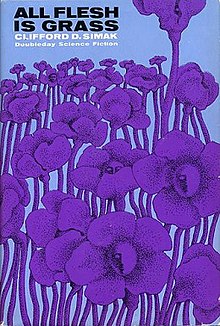
It is as real as the other universe described in Clifford Simak's decidedly inferior novel All Flesh is Grass.  Why shouldn't his universe in which purple flowers which communicate with each other through their root systems having god-like powers be as valid as what others create with math instead of words?   At least he imagines them as able to break through to our Earth.  Those of the cosmologists are forever unavailable to us.  It's just a difference of a description in words and those in math.  The equations of a Hawking or some other ideologically motivated cosmologist are no more a complete description of an actual universe than the equations of physics can be a complete description of even one electron which can be known to exist through observation in our one and only knowable universe.  

I don't know if old and eminent Roger Penrose is really making the claims that I'm seeing the atheist sci-rangers Youtubing about.  I'd be surprised if he's making such rash statements about something so recently revealed.  If he is, he might be anxious to convince himself that there is no God and no afterlife he has to worry about as he continues in his tenth decade.   The writer, now somewhat faded in reputation, Somerset Maugham reportedly summoned to his deathbed the positivist philosopher A. J. Ayer, who was runner up to Bertrand Russell as Britain's biggest celebrity atheist, to convince him there was no afterlife.  I hope Penrose won't be calling on a Dawkings or Grayling to reassure him, my respect for him would suffer enormously if he did that.  

There's no reason to suspect that the new observations of those very early galaxies will result in an accurate description of a steady-state universe that will be the new "end of physics" or that even further and more impressive observations of what's out there will not overturn some of the entire majestic cathedral of contemporary physics.  Cosmology is such a wacky field of science that it's all over the place all the time, anyway.   The theoretical descriptions of physics, the mathematical theories of the 20th century as those of the 18th century, which worked quite well for their time and still do for most of human activity, but they were not complete.  I doubt human minds are capable of producing science which is a full and complete description of physical reality, much of that is very possibly forever outside of the reach of human minds because human minds are not infinite, either in abilities of perception and analysis or in the time it would take to come up with a full description of physical reality.  I'm not even convinced physical reality is fixed and not changing.  Considering some of the cosmological theories that the atheist ideologues have come up with, parts of some of the more far fetched "many worlds" multiverse conjectures (Boltzmann brains, for the love of Mike!) and ask why those aren't more ridiculous than the idea that the universe is evolving, even in what we might imagine as its "laws".  If that's true then it is a guarantee that human beings will never have a complete physics because the subject matter of physics, itself, will be evolving.  

Any description of even physical reality is bound to be incomplete and biased by the human beings that come up with them because of all that.  Whether that description is made by ancient Middle-Eastern mystics as copied, arranged and edited into the Hebrew Bible or by University professors published in the most highly regarded scientific journals.  That's just the way things are.  Some may be useful for some things including as descriptions, none are useful for all things.  Some of it is, in part or in whole, not useful for much of anything.  Some of the most deadly dangers to humanity and life on Earth are the product of science.  I hold that the human made choice to exclude moral considerations from science and academic credentialing is one of the most perilous choices made in the history of our species.  

As to a steady-state universe disposing of God, there's no reason to think that's the case.  The idea that the universe is eternal co-exists with many religious ideas.  It's not that much of a difference between believing the universe being here because God created it out of nothing and the idea that the universe exists because it is based and founded in God.  Since God as described in Christianity is eternal, God's reality is entirely compatible with an eternal universe, especially one that is always changing.  The idea that God is unchanging is certainly not based on the Scriptures of Judaism or Christianity nor, I believe I'm right, Islam.  It seems more like a speculation of Platonism pr Pythagorean philosophy than the Hebrew tradition.  God is said in Scripture to change God's mind and God's actions are not consistent nor entirely comprehensible by human reasoning (which, by the way, is consistent with the history of science).  God in the Bible is engaged in a covenantal relationship with People and, explicitly stated, animals, God declaring himself in a covenantal relationship with "all flesh."  One of the most impressive ideas to me is that God's covenant making is not exclusive to any one ethnic group but is explicitly stated to include those of other groups, even those opposed to The Children of Israel.  God's actions in relation to all of God's creatures is not uniform in its nature.  God's fidelity is promised* but what that fidelity is in terms of human perception is not guaranteed to be always what we want it to be or what we might fear it is.  We are told to expect that this earth and the heavens we know and are used to are not eternal and will change and even end, as our Earth and our seen heavens certainly came into existence and change.  The Hebrew seers who had the insights imperfectly recorded in the beginning verses of Genesis were certainly unaware of much beyond what they could see with their naked eyes and experience over time and the lore of those from previous generations.  They were certainly not talking about galaxies - being unaware that the stars they could see were part of a galaxy, other galaxies weren't know of by science until the 1920s.

Despite the extremely impressive concepts contained in it, it is a mistake to believe they were describing more than they knew of.  They had no idea of the vastness of the universe, after all even the most sophisticated of currently living scientists have had their concept of that enormously increased in the past year.  Those instruments that could show that wouldn't be invented for millennia. The "heavens and the Earth" described in Genesis are exactly that, what they could observe.  It's impressive that they intuited that those had a beginning, even the steady-state guys would assert that every star and the planets and the Earth that they could see had a beginning.  If the Big Bang model is in some sense true - perhaps those far distant galaxies that science couldn't imagine being there so recently only indicate there was a much bigger bang much longer ago - I still don't think we can relate that insight about Creation in Genesis of what they could see to that event.  Though if it annoys the atheist ideologues who want to fit science into their ideology, perhaps it's worth making that speculation.   Maybe their mystical insight was of that.  

My religious faith isn't based in cosmology and it's not based on the explanations of those ancient seers being something like proto-science.  My faith is based in my experience and my observations of what I can see of human life and life on this planet.  It is based in my experience of the good of life and the bad of it, I'm expecting the bad because it is what happens when People are free to act in ways that are bad but I know that in order for that to be diminished over an entire society or in the world it takes religious faith in realities that science has more often denied than it confirmed.   I've developed all kinds of ideas about what the bad in life means, but that's not something I feel like sharing in this response.   I think that scientists who get pissed off over People rejecting science should consider the role of malignant science and science that promotes a depraved view of life in that rejection.  Though that's more to do with the atrocities of ideological biology and its appendages in the pseudo-so-called-social sciences and the most debased of those, economics.  In the past twenty years my skepticism about any supposed science that is prefaced by "cog-" or "neuro-" has become nearly complete.  My faith doesn't depend on whether Roger Penrose or any other physicist or physical mathematician eagerly and prematurely declares that the universe is eternal or had an absolute beginning.  

First, I won't believe their word is the final one and, as I said, I don't base my faith on that kind of claim.  I would be surprised that someone like Penrose would make such a claim and show that their hand is and likely always was influenced by their preferred ideology.  As I've recently repeated, I think that the role that ideology increasingly plays in science is one of the untold scandals of modern culture.  The best thing for scientists to do about that is to admit when it happens and consciously try to keep it out of their science.    I have long expressed my admiration for the biologist (his first degree was in physics) Richard Lewontin because he was right up front in admitting that his atheism was purely ideological and based in his faith in scientific method**, that he had a preference for materialism and a dislike for "miracles,"  I think because of that his science was relatively unaffected whereas his opponents in biology, such as E. O. Wilson and Richard Dawkins, didn't much try to separate out their ideology from their scientific claims.  Dawkins is, I think, destined to be known in the future as someone whose ideology entirely guided his science as well as his retirement career in polemical atheism.  As even some of his fellow atheists have admitted, when he expresses himself against religion his ignorance is embarrassing.  As Lewontin and his colleagues pointed out in 1976, Dawkins' side in the biology wars is more or less a recapitulation of eugenics.  But that's inevitable when Natural Selection is your creator god.  I don't believe that natural selection is any more real than universes that just pop into existence when I hit the comma key instead of the period key.***   I don't mistake math as being God, either.

Second, I like every other human being has a right to take our own experience of life as being a valid basis for judging reality over what other People claim on the basis of their experience.  That's especially true when we have good reason to suspect their claims are based not on experience, such as careful observation, but are a consequence of their ideological preferences.  After all, the reason given for why we shouldn't expect our experience to lead to valid conclusions is the accusation that our ideas about that may be biased by our preferences.  I think there's every reason to believe that is especially true in the most ideologically driven sciences which are entirely out of hand these days.  Cosmology, evolutionary speculations, anything with the prefixes "cog" and "neuro" and all of the so-called social sciences are primarily governed by idology these days.  I've got to rely on my own judgement in choosing what any of them claim, anyway.  So do the materialist-atheist-scientistic true believers within each of those.  I'd rather take my chances on my thinking, the thinking I'm responsible for and have to live with, in the end.  

* Among other things, that declaration of God's fidelity leads me to believe that it must become full in the afterlife since it's not manifested here.  Though we have a responsibility to do our best to make it happen on the one and only Earth we have access to.  I think anyone who feels that way is bound to be easier to get along with than they'd be if they denied that's the case. They'd have nothing to lose by being a mean, selfish bastard.   Believing in the God of Moses, Jesus and Paul wouldn't lead to that, which is why I don't believe the "white evangelical 'christian' nationalists" are Christians.  They're vulgar materialist Mammon worshipers.  "By their fruit you will know them."  That truth is more reliable than anything that I've read coming from Darwinism.

** I wouldn't accuse Lewontin of scientism in so far as he admitted the limits of science in ways that his ideological opponents in science never did voluntarily.   Lewontin was far more philosophically sophisticated than most scientists of his generation or after have been.  His student Jerry Coyne is about as unsophisticated in philosophical thought as Marjorie Taylor Green is.  That they share similar rhetorical tactics is not any shock to me.

*** Presumably, in that absurd scenario someone like me is hitting the comma key in another universe which would, presumably, generate jillions of universes and, then, in each of those new universes as well, so the process would have to go on quite literally, eternally.  It is probably the stupidest idea I've ever read about that has been seriously entertained as real within science.  And you wonder why I say that materialist-atheist-scientism has led science into something like its ultimate decadence.

Sunday, November 12, 2023

Seems Like Old, Old, Old Times - The Tired Old New Atheists As Privileged White Folks Pretending They're Oppressed - Hate Mail

RECENTLY, I'VE COME TO think that the new atheist fad of the 00s was largely about affluent white people pretending that they had suffered some terrible oppression at the hands of Christianity and Judaism and Islam.  While there may be some isolated places where Christianity has that kind of power, though I'd need to have those named and proved in the 21st century, and large parts of the world where Islam can take oppressive forms, mostly it was play-time for the college credentialed and those who wanted to be mistaken as part of that kewel-crowd.  

I've never denied that in Ireland up to living memory there were terrible oppressive institutions, a legacy of pre-Vatican II Catholicism  gut those are largely over, a product of the revelations of the sex abuse scandal revelations in the early years of this century.  I would certainly admit that the residential schools, both church administered and those which were quite secular, in the United States and Canada are within the living memory of those who were victimized by it.  And there is the already mentioned child sexual abuse scandal which is, I will point out, hardly an exclusively religious thing and which, in its secular form in the sex industry is a current and terrible thing which, oddly enough, has gotten little of the coverage of the part of it that had a religious connection.   Much of the most exigent criticism of that within religion has come FROM WITHIN RELIGION.

And in pointing those out I will not pretend that those were ever 1. any manifestation of the Gospel of Jesus or the teachings of Paul and the other writers of Christian Scripture, 2. that they were solely a product of religious institutions and hierarchies but had their secular governmental components and permission for them to occur, 3. that in many instances the secular aspects of them were and still are terrible.  The same Hollywood that will issue a Spotlight movie is constantly in the business of sexualizing even very young children, itself.  

But the people I'm talking about, those who delighted and relished their fashionable atheism starting with the readers of Richard Dawkins, Sam Harris, others on the fringes of science and on to the likes of Daniel Dennett and the Brit-trot turned Bush II warmonger-Neo-con, Christopher Hitchens.  Most of those I ever knew of, read, heard, etc. were affluent white guys and gals who had little to nothing to complain about in line with the crimes and sins of the kind I noted above.  Most of their whined of oppression was never something they experienced.  Certainly those four "horsemen" of neo-atheism (though they mostly were just nags) had little in the way to complain about.  In fact on one occasion the always-putting-his-tender-foot-in-it Dawkins said a little sexual abuse of boys in Public Schools was innocuous.  That would go along with the fact that within organized atheism in the late 20th century, you could advocate for pedophile rape of children on the pretense that even very young children can give adult level consent and still become a "Humanist of the Year."  I have never, once, read an internal criticism by organized atheism of that fact, nor the fact that there was quite a bit of evidence that at least one of the most renowned of such atheists, James Randi, had some pretty shady past he was never made to answer for, much.  

Most of those who hated on religion online were entirely comfortable, middle-class to affluent white guys and gals, most of them college credentialed but not really skilled at critical reading and fact checking, most of atheist polemics are riddled with shoddy scholarship, outright fabrication and misattribution, etc.  Lies, in short.  One of the early conclusions I came to in that addressing of it was that if you don't believe in sin you don't believe it's a sin to tell a lie and your only inhibitions against that were either a vestigial habit of feeling it wasn't nice to lie or that you were afraid you couldn't get away with it.  And in that milieu, truth telling was far more likely to get you into a jam than going along with the common received mythology and lies.  Just as when I researched the history of natural selection I was constantly finding confirmation of my hypotheses that it was the motivation of eugenics and the most infamous of that, the Nazi genocidal eugenics, I was constantly finding out that atheist lore and literature lied constantly, everything from the near ubiquitous falsification of what James Madison said in his Memorial and Remonstrance, to the supposed atheism of the earliest recorded laws of Hammurabi and Confucius, to the alleged atheism of Mozart, to the almost certainly forged letters of Jefferson to Tom Paine that no one ever saw except one early atheist polemicist, and onward.  I quickly came to the conclusion that everything about modern ideological atheism was constructed of lies and myths - many of those myths found in stuff taught in universities and colleges and, more seriously, in pop-historical bull-shit in shows and movies and BBC-PBS TV costume drama stuff.  The mythologies surrounding the trial and sentence of Galileo, the Scopes Trial, the Huxley-Wilberforce "debate," the burning of Bruno, the Mortara kidnapping, etc. could fill volumes of correction of the common received wisdom.  

So many other links to researched, documented, posts on these and similar topics over the past ten years here and many in the years before that elsewhere could be given.  I haven't rejected atheism and its . . . um. . . "intellectual foundations" without looking at those, seriously. 

I hold that there is little in religion that should be sacrosanct and above questioning, though I would certainly put The Golden Rule and some other such universal commandments of good to everyone in a special category.  I see a critique of  and I smell evil intent, especially when such stuff is published as "science."  I think anyone who sets themselves up or allows themselves to be set up in a hierarchy of authority and power opens themselves up to entirely justified skepticism and criticism, no mere human being or their ideas is rightly held up to be above those.  It's dangerous to do that.  But I have always noted that "religion" considered as a category has always practiced a high level of internal criticism, even within one denomination there is bound to be continual disagreement and criticism, the fracturing of denominations and parting of the ways over differences of that sort are a hall mark of every religious tradition I'm aware of.  And even when there is not a fracturing and parting, religious denominations are continually changing due to that kind of internal criticism.  Even during the much maligned scholastic period, there was a serious and lively history of some very extensive and often quite high quality internal criticism and disagreement.   As could be pointed out, even some of the worst artifacts of the late medieval period presented subject matter in a form which included extensive internal criticism of what the authors were supporting.  Modern scholarship and even science is seldom if ever so extensively honest about the weaknesses within what they are asserting.   If the claims of those scribblings of the new atheists of the 00s which I've read ever got such a treatment they would have fallen apart like the lore of PZ Myers and his "Great Desecration" fraud when I casually examined the claims which caused a sensation across the internet.  

Like all fads, sooner or later those get old and the generally stupid and superficial tots who grasp onto those move on to whatever next big thing put in front of them.  I was confident the new atheism would get old, especially as its biggest mast heads were such a bunch of flaming assholes.  I think the Covid pandemic did more damage to organized religion than the new atheism did, the moral and necessary closing of churches and People getting out of the habit of going to church.  In Catholicism, I think the consequences of the child sexual abuse scandal mixed with the all-unmarried-male priesthood not attracting enough candidates for priesthood to make ex-Catholics one of the largest religious groups - according to the polls - a real thing.  I'd add in the United States, the fact that a majority of the U.S. Catholic Conference of Bishops are still JPII-Benedict XVI era thugs and assholes to what caused that.  

I don't really worry much about the new atheism except in so far as they dupe People into believing lies and giving them permission to be "spiritual but not religious."  I'm not much impressed with the "spiritual but not religious," because I've seen nothing much good coming of that flaccid, meaningless self-labeling.  I haven't seen anything like the Catholic Relief Services which a Republican-fascist member of Congress recently advocated an armed attack on.  I haven't seen anything like the many Protestant charitable efforts, nor others in other branches of religion.  I haven't seen much in the way of those self-labeled "spirituals" doing much of anything that gets anything done at a personal cost and a real effort.  But, then again, I don't see much of that in much of what gets to call itself "religion" either.  A good part of that goes right back to that sacrosanct entity which no one is supposed to question or criticize, the First Amendment which is stupidly unspecific about what a "religion" is.  Which leads to all kinds of abuses, including the creation of an American neo-Nazi "religion" which was created to get tax breaks - it joins many another such "religions" and "churches" which clearly were never religious unless you call Mammon worship a religion.  I'll include the many, many atheist organizations which seem to have getting a tax exemption for donations as one of their first acts, in that.  Atheism is, honestly considered, a religious position.  Generally a naive, rather simplistic and even stupid set of faith holdings, little considered and little tested.  As I've recently pointed out, it even posits all manner of creator gods, as human beings seem to always need to find those even when they deny the reality of God the Creator.  Even the religion-reluctant Thomas Jefferson was forced into that when he had to write the "founders" excuse for breaking away from Britain.  I don't think human beings can really think hard about things like that without finding they need God or, at least, some temporarily, henotheistically raised up "god."  Most often some idolatrously considered part of materialist-atheistic-scientism.  If not that then money.
 

Wednesday, November 8, 2023

They Whine When You Point Out That The Ivys Are Training Grouds Of America's Most Dangerous Gangsters And Also The Judicial Dupes Of Them

LET'S START with the indicted fascist who last weekend's news reveals is still active in the scheming to impose martial law on the United States on day 1 of Trump II and Republican-fascism forever after.

Jeffrey Clark :  Harvard University (AB) - University of Delaware (MA)  - Georgetown University (JD)

He graduated from one of those putrid Catholic prep schools for the rich, the Father Judge High School in Philadelphia.   Big on sports, football, lacrosse (a dead giveaway), golf (need I go farther?), apparently low on the teachings of Jesus and Paul.   

----------------------

I'll continue with the three Judges, two Obama appointed and one Biden appointed, who gave Trump 17 more days to call out his goons to do violence against Judges, prosecutors, jurors, etc.  instead of holding an immediate hearing and issuing a timely ruling against the most pampered felon in American history.

Patricia Millett: University of Illinois Urbana-Champaign, Harvard Law School

Cornelia Pillard: Yale University, Harvard Law School

Bradley Garcia:  Johns Hopkins University, Harvard Law School

I am so confident in the provenance of those three appeals court judges that I made a dare to myself to post whatever I found, even if they were all products of Land Grant universities.   

The Ivy League law schools are the source of what's wrong with the law.  

I should have posted the Youtube of Keith Olbermann's podcast on this because it's far better in the listening:


Tuesday, November 7, 2023

The Cowardly Behavior Of the Appeals Court Panel Permitting Trump's Terrorism

 IT MAKES SOME LIBERALS nervous when I diss judges and "justices" so often.  I don't diss all of them, though almost all of them share in some of the dishonest habits that lead them to be so dissable.    I do what I can but I post this recent masterpiece in entirely justifiable anger at that kind of cowardly, willfully stupid judicial behavior that is so obviously dangerous to us all.  It is a masterpiece in the kind of thing I intend to say.  Here it is from Keith Olbermann's transcript of his podcast bulletin from this weekend.

The District of Columbia Court of Appeals Friday afternoon halted Judge Chutkan's gag order against Trump for at least the next 17 days. Rather than deal with it on an emergency basis, it scheduled the first in-person hearing for NOVEMBER 20.

The members of the three-judge panel consisting of two judges appointed by Obama and one appointed by Biden should be impeached and disbarred because they actually fell for not just a pathetically weak 1st Amendment excuse but also for a series of arguments based on the delusions-of-grandeur, megalomaniacal premise that this madman Trump believes a 100,000,000 Americans are somehow being deprived of their right to hear him because a judge had ruled no, Trump was not allowed to threaten the judge and the court officials and the prosecutors and not allowed to try to convince his cultists to try to kill them.

He had already been given – BY the Judge who issued the gag order – the right to continue to insanely claim that the prosecution of his attempt to overthrow the government and foment violent revolution in this country and install an authoritarian regime with him as its permanent dictator was actually a political vendetta personally ordered by the President of the United States. All she wanted to stop was the continued attempt by Trump to use the social media site he OWNS and the propaganda video networks that make their only money by platforming him and the fascist rallies he stages to say it in just the right way to get somebody to KILL special counsel Jack Smith and to KILL judge Tanya Chutkan and to call in bomb threats to the court room and to doxx the jurors, the way he got hundreds of his cultists to attack the Capitol on January 6 and the way he doxxed Obama and one of his cultists went to Obama’s neighborhood and hunted him, with the ultimate goal being obvious and evil: to institutionalize political violence and turn it into the determinative factor in how this country is not governed but RULED.

Donald Trump is a terrorist. A. TERRORIST. And he has been using terrorism by proxy to destroy the laws and rules of this country, without interruption by the law or the courts for fully EIGHT years now. And when the justice system FINALLY stands up on its feet and the courts FINALLY stand up on their feet and recognize that after ALL of our other institutions have utterly failed and ALL of our leaders have failed to protect the nation against domestic terrorism in the form of Trump and his family and his enablers, when SOMEBODY finally BEGINS to do SOMETHING about it, this DC Appeals court say well, no, maybe the legal system of this country has been bending over backwards to protect the rights of this man who would destroy it and KILL anybody in it he doesn’t like, but we don’t see that in bending over backwards it has yet severed its own SPINE yet, so we’re going to grant an “administrative stay” until at least November 20th to prove that we’re great legal scholars and we’re giving Trump every opportunity to get Jack Smith or Merrick Garland killed and why, yes, if there HAD been some sort of legal case against Osama Bin Laden before us in the summer of 2001 we would have delayed the injunction against him for two weeks because it’s FAR more important to give people bent on destroying the United States every last ounce of their rights, than it is to protect the LAWS of this country or the JUDGES of this country or the REPRESENTATIVE FORM OF GOVERNMENT of this country itself.

Monday, November 6, 2023

John Fugelsang on Christianity


When They Insist On Having It Both Ways, They're Pulling A Con Job

IN THE FIRST CHAPTER of the huge multi-volume A History Of The Book In America, the eminent librarian Hugh Amory starts:

From the beginning, printers have rejoiced in two ideologies; one vindicates the majesty of their art; the other exculpates its abuses.  In the more familiar of these pleas, echoed in may an early colophon, theirs is a divine art and mystery, Laurens Couster's "art that preserves all arts" (ARS ARTIVM OMNIVUM CONSERVATRIX), Johannes Gutenberg's "artful venture" . . .

The alternative ideology, though rarely noticed by historians of the colonial book before Stephen Botein, insists that publishing is only a trade, exercised by "mere mechanics" who must print whatever comes to their hands.  William Bradford, the first printer in Pennsylvania, claimed that his divine art deserved the special patronage of the colony, yet, only six years after his arrival in 1685, he argued that the Philadelphia magistrates could not blame him for printing George Keith's attack on the Quakers, since he had to take whatever work he could get. . . .


Due to a lack of time, I've skipped the lists provided of examples of each of these self-serving ideological formulas in practice instead of in abstract claims.

And it is self-serving and dishonest and hypocritical.  The history of printing and publishing - the proverbial "press" of First Amendment fame -  is full to the top of negative consequences of what has been done by the printing industry, a profit making venture, something which, by the very words of the first claim is an entirely artificial human creation, not carrying with it any kind of natural right.

Similar two-steps are frequently found of self glorification of those engaged in different human enterprises then followed by a total disavowal of the frequently bad consequences of those, often destroying the lives and rights of People, damage to the environment, inciting violence, in the case of lawyering and judging and "justice"ing finding for those who do all of those evils.  That's as true for the most obvious instances of intentional harm doing as that of those who are secondary in allowing that to happen and the ones who get the wrongdoers out of any penalty for doing it.

I have a whole list of rights which are often summarily disposed of by the publishing industry, by lawyers, by judges and "justices,"

The right to know the truth.

The right to have the truth about them being told.

The right to not be lied about.

The right to not be attacked by a mob, in person, in the media, online, etc.


The right for all of us to have an honestly informed voting public who will install the government.  That last one is among the most obvious of the most consequential rights which was never included in any of the Constitutional language, on which any notion of self-governance, representative governance or democracy completely depends.  

That the fabled founders never noted that shows what total amateurs they were when they set up the government.  To put the present First Amendment language in place without such stipulations was always a guarantee to produce anything but an egalitarian democracy.  The worship of The First Amendment as it is and, especially as it is read by Supreme Courts, lower judges and "civil liberties" lawyers extremely dangerous to those who will be destroyed and attacked AND TO THE POSSIBLE ACHIEVEMENT AND RETENTION OF A REAL DEMOCRATIC GOVERNMENT.   

That Benjamin Franklin, probably the wisest of those in what they decided was going to be the Constitutional Convention, was a professional printer is certainly relevant to what came out of that.  That so many of them were lawyers and, overriding that all, they were all affluent, aristocrats many with questionable business practices and many slavers as well.  

We need a new Bill of Rights that includes those rights I've listed above and many others as well, the right to a livable environment perhaps more pressing than any of them.  But you'll never get that until the Constitution stipulates there is no such a thing as "corporate person-hood" and there are no rights held by corporations, and that there is no "right to lie."  Anyone who says there are such rights are anti-democrats, anti-egalitarians, they are tools of the oligarchs and plutocrats. 

By Something Like Popular Demand, I Respond To Simels

 "Simps gets upset when I diss the commercial entertainment industry."

SHORTER SPARKY: Rock-and-roll and comic books caused Juvenile Delinquency.

They would seem to have contributed to your illiteracy and inability to draw a rational conclusion about what someone else said. 

As to taking the potential of comic books being a danger due to the content those hold seriously, I don't have to stand alone in that worry,  it's clear that those who produce them share that worry and it's clear that some of those who draw them intend them to have malignant effects:

For a lot of Americans and non-New Yorkers, the number “212” holds no special significance. Neither does the number “51.” But for comic book artist Ardian Syaf, who slipped the numbers into Marvel’s newest X-Men comic book, they represent an anti-Semitic, anti-Christian message.

It’s particularly inflammatory and disappointing that it was smuggled into the X-Men, a team that’s represented inclusivity, empathy, and tolerance.

Syaf is Indonesian artist, and in Indonesia, “212” denotes a mass protest against Jakarta’s Christian Gov. Basuki Tjahaja Purnama. Meanwhile, as the comics news websites Bleeding Cool and ComicBook.com explain, the number 51 refers to verse in the Quran (Chapter Surah 5, verse 51) that’s been interpreted by those protesting Gov. Purnama in Indonesia to: “Muslims should not appoint the Jews and Christians as their leader.”

In the premiere issue of X-Men: Gold which came out last week, there are a few instances where Syaf surreptitiously inserted the numbers into the comic. You can see an example in the panel below, which features Kitty Pryde, the Jewish-American leader of the X-Men, talking to civilians, and “212” appears on the awning of a building in the background of the scene
. . .   

And that use of comic books goes all the way back to before Simps or I were born, it's a fact of the history of comic books.

The Nazi-controlled government in German-occupied France produced the Vica comic during World War II as a propaganda tool against the Allied forces. The comics represent Nazi influence and perspective within French society. The three issues are Vica au Paradis de l’U.R.S.S, Vica contre le service secret anglais, and Vica défie l’Oncle Sam. The author, Vincent Krassousky (also known as Vica), disappeared in the late 1940s.

The history of comics to promote antisemitism alone is a long one.  The Library of Congress, among its collections, has a trove of German antisemetic cartoons going back to the 1890s.   If you think that the future Nazis might not have imbibed such stuff in their formative years, you are as stupid as an ACLU attorney pretends to be and "justices" on the Supreme Court, as well. 

Pop kulcha carries a far higher potential for danger BECAUSE IT IS POPULAR AND MANY, MANY MORE PEOPLE CONSUME IT THAN THEY DO ACADEMIC SCRIBBLAGE AND BABBLEAGE.   

As for neo-Nazi rock music, for crying out loud, Simps, I thought you were supposed to be an expert in rock music?   I hate it and even I know about that.   You think that doesn't carry any dangers?   If all that John Lennon pretending to be a flower child peace and lovechild junk is supposed to have a positive effect, you can't pretend that without admitting the potential of its opposite to gain influence.  The ACLU line that all this stuff was innocuous was always a lie, maybe that's one of the reasons they duped so many idiots into believing there was a "right to lie" so much of their legal mumbo-jumbo were blatant lies of that kind. 

Update:  And, while I was doing the minimal amount of research necessary to respond to this, I found out that I wasn't the only one who noticed that what I started calling "fascist chic" in the early Reagan years was a real thing, especially as "Nazi chic".   

Nazi chic is the use of style, imagery, and paraphernalia in clothing and popular culture related to Nazi-era Germany, especially when used for taboo-breaking or shock value rather than out of genuine sympathies with Nazism or Nazi ideology.

Its popularity began in the 1970s with the emergence of the Heavy metal, punk and glam rock movements: the Sex Pistols' first television appearance occurred with a person of their entourage wearing a swastika. Nazi chic was later used in the fashion industry.  The trend, while having originated in the Western culture, by the late 20th and early 21st century became particularly popular in Asia. Nazi chic also partly inspired some of the fashion of the leather subculture.  

I noticed it, especially, in the themes and content of Hollywood shit.  Then in pulp publishing.  I associated it with Reagan and it has continued since then all through pop kulcha.   I would call "Celebrity Apprentice,"  a live action comic, as being a part of the wider phenomenon, it gave us Trump as a president, already.

 Update:   45 mins ago
Oh good grief, Sparky, this is just too easy. It's like shooting ducks in a barrel with an AR-15.

Here's a hint, clueless: my use of the phrase "Juvenile Delinquency" was a specific reference to a spcific time in recent American history. Specifically, the 50s, i.e. when humorless prig idiots like you decided that Batman and Robin (obvious homosexuals) and Elvis Presley (lock up your daughters!) were corrupting our youth and had to be stopped, lest the Commies take over!!!


In other words, nothing in your above rant has the slightest relevance to the point I was making, but of course since you have no idea how humor and irony work, that's not exactly a surprise.

None of that has the slightest relevance to the crap in your rant

 I'm not bound to argue on the ever-shifting bull shit that you shift to when you've got nuttin,'  the fact is you generally have nothing.  

 Second: I've been telling you for well over a decade that you should attain a 4th grade ability to use the dictionary, here's what Merriam Webster online - you don't even have to open an ink on paper book, Stupy - says as to the origin of "juvenile delinquency."


juvenile delinquency
noun
1: conduct by a juvenile characterized by antisocial behavior that is beyond parental control and therefore subject to legal action
2: a violation of the law committed by a juvenile and not punishable by death or life imprisonment

Word History
First Known Use

1816, in the meaning defined at sense 1

As with Trump, clearly someone who was, I believe, born about the time you were and whose rhetorical methods you share, as well,  you seem to believe that the world began about the time you became conscious of it and know nothing else.  There's a lot of that around Eschaton, one of the reason adults fled from there long ago.  Also, nothing outside of the limited repertoire of American, mid-brow so-called erudition exists.   

Shorter Stupy, Nazi and pre-Nazi antisemetic and other propaganda had no effect, at all.   Hey, Simps, the Supreme Court holds the same massively stupid idea, apparently. 

Update 2:

So yes -- you ARE saying that 50s comic books and rock n roll caused Juvenile Delinquency. Good, I'm glad you've cleared that up. :-)

Simps, you're the only one who mentioned "50s comic books and rock and roll. . . "  I'm nobt invested in that narrative.   I doubt most juvenile delinquents of that era were doing much looking at ink on paper.  Though they may have been listening to pop music shit.   I'd think they got most of it through Hollywood crap, it's easier to consume.  

So, let me guess, you heard something about this in the media or through some mid-brow media geared to the geezers with college credentials but no real education.   Let me guess, someone wrote a book about it, you watched the report and didn't read the book.   You're like Susan Stamberg late of NPR.  She couldn't open her mouth without a cliche coming out of it and you can't type on a keyboard without typing them.   That's the difference between having a college diploma and being educated.
 

Sunday, November 5, 2023

A Frosty Footnote

IN MY RECENT READING VACATION into the Library of America volume of Robert Frosts' poems and prose, there is this 1951 half-rhyming-limerick that demonstrates even as the news about the Nazi death camps and other Axis genocidal atrocities was sinking in, eugenics was still being pushed by some of the best and brightest among us.

Pares Continuas Fututiones

Says our Harvard Neo Malthusian
"We can't keep the poor from futution;
But by up to date feeding,
We can keep them from breeding."
Which seems a licentious conclusion!

 
Of course, being a sworn enemy of eugenics and Malthusian economics and the "best and the brightest" who push those as "a benefit to humanity and the world," and a long time hater of Harvard (we get lots of them here North of Boston, as Frost would have known better than most),   I had to find out who the Harvard boy who was pushing that in 1951 was.  Luckily the book provided that answer in the many very helpful notes in the back of the book.  

Harvard Neo Malthusian]  In the letter to [Louis Henry] Cohn [dated September 21, 1951], Frost wrote that James B. Conant, a former professor of chemistry and the president of Harvard University (1933-53), as a "mouthpiece" for science had "undertaken for it to make a the planet less uncomfortably crowded with a new kind of manna . . .  a contraceptive to be taken by mouth so we can stop breeding without having to stop futution."  

No doubt tricking them into it or forcing them into eating it was the clever scheme.  The elite, especially the elite in science and the "science"  that really matters, economics, never seem to ever tire of thinking of ways of eliminating large numbers of People from the human future.  And to find ways to insult or belittle their own intelligence in their monumental arrogance.   

Conant was a great progressive who decided to push for a meritocracy as an alternative to the traditional American elite but never seemed to really understand that equality was the real cure for what was wrong with the world.  He opposed real equality, equality in results, for that guarantee of the elite always remaining elite, "equality of opportunity."  I'd love to find out if he ever tried to stop legacy admissions to the college he led, though it doesn't seem to have happened.   As I recall he did vote for the cap of 15% of Jewish students at Harvard, instituted by the previous president.   It's largely due to him that we got the college board examinations that merely reinforced the status of those with wealth whose parents sent them to better schools.  He really was kind of a pudding-head about how the reforms he instituted would actually work out. Perhaps he saw opening up admissions to a wider section of the already wealthy and, so privileged as progress.  Maybe it's just he wanted more regional diversity of the elite at Harvard.   

Unfortunately I can't find out where he made the suggestion, though I suspect it is in the Terry Lectures at Yale, he was the 1951 honoree.   Unfortunately, I don't have a copy to look at to find out.

I don't imagine he imagined feeding his contraceptives to the most dangerous families in the world, those who he, no doubt, would see as meritorious, many of them Ivy League grads and others like them.  I could take the time and research and give you a list of such dangerous people born around that time and after who I'm sure Conant wouldn't have considered the world would be better off without.  The majority on the Supreme Court and many in the Congress, for a start.
 
As I most recently mentioned around the centennial of America's most evil war criminal at large, Henry Kissinger, it was in contemplating his evil that I first realized there were many extremely intelligent People the world would be better off without but there was no such thing as a good one that you could say that about.  And a lot of them are certainly not on any list Conant would have had about who should not be allowed to have offspring.  I'd certainly put the children of George H.W. Bush on a list of those the world would probably be better off  if George and Babs had been fed contraceptives.  I could go for the idea of having prevented those lists of Ivy Leaguers and their ilk who have duped Americans into believing there was "a right to lie."  And Ron Desantis who is not as far removed from them as they'd ever want anyone to notice.

And it's such a pudding-headed idea that was bound to not happen.  For a start it would mean feeding the poor and the best and brightest aren't, on balance, big on that.  And it wouldn't have worked.  Of course, if People have economic security, if they have a decent life with prospects of being able to live out their elder years in security, most People opt for choosing a smaller family for themselves, that's pretty much what experience has shown.  

I don't know, maybe those rhymes work better in the old style of pronouncing Latin, my teacher, from the generation right after Frost, taught me the more up-to-date reconstruction of Latin pronunciation.  Or maybe Frost pronounced the English differently. In the notes on it Frost pointed out that he was referencing a particularly blue verse by Catullus, poem no 32 that includes these lines,  

. . . sed domi maneas paresque nobis
novem continuas fututiones . . .


The note translates that as,

but stay at home and prepare yourself
for nine consecutive copulations


I'd have thought "prepare ourselves" would be more accurate.

It's all a far cry from the popular imagination of Frost, that boy improbably swinging from those friggin' birches.